
Why Astrophotography Is Becoming More Computational
Discover how stacking, plate solving, noise reduction, and computer vision are making astrophotography more accessible and precise.
From Manual Setup to Computational Imaging
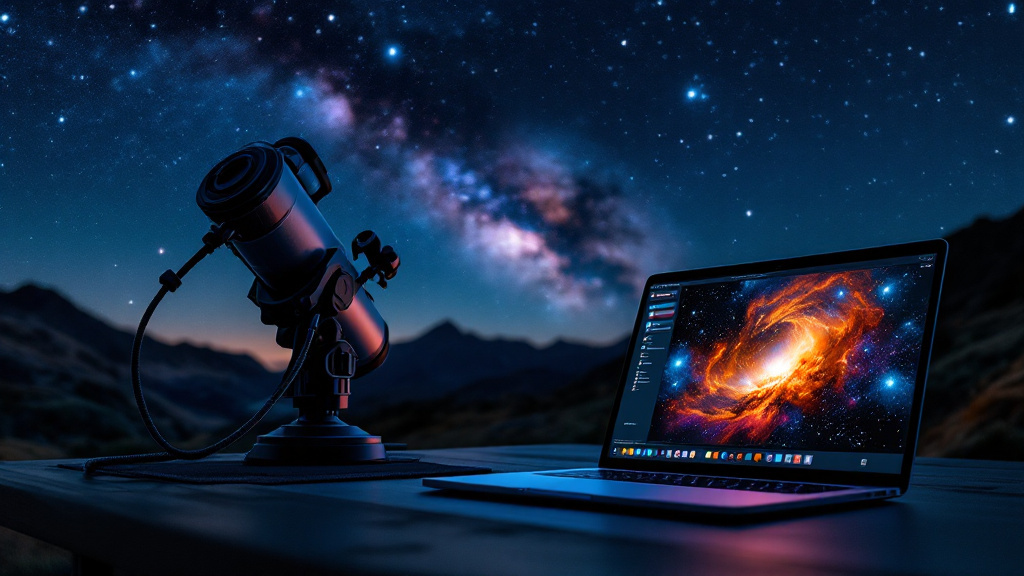
Astrophotography has traditionally demanded patience, technical knowledge, and a collection of specialized tools. Before capturing a single image, photographers often had to align a mount, identify stars, locate a target, focus precisely, and compensate for Earth’s rotation. Even then, light pollution, atmospheric turbulence, and sensor noise could obscure the final result. Today, computational imaging is changing that workflow by allowing software to solve many of these challenges in real time.
One of the most important advances is image stacking. Instead of relying on one long exposure, a camera captures many shorter frames and combines them into a cleaner, brighter image. Processing software can align the frames, reject artifacts, and average out random noise while preserving details in faint galaxies or nebulae. This approach makes sophisticated astrophotography possible with more accessible equipment. Computer vision also helps interpret the sky, turning raw camera data into useful information about stars, planets, and deep-sky objects. The telescope is no longer just collecting light; it is helping understand and present that light.
The Technologies Behind Smarter Astrophotography
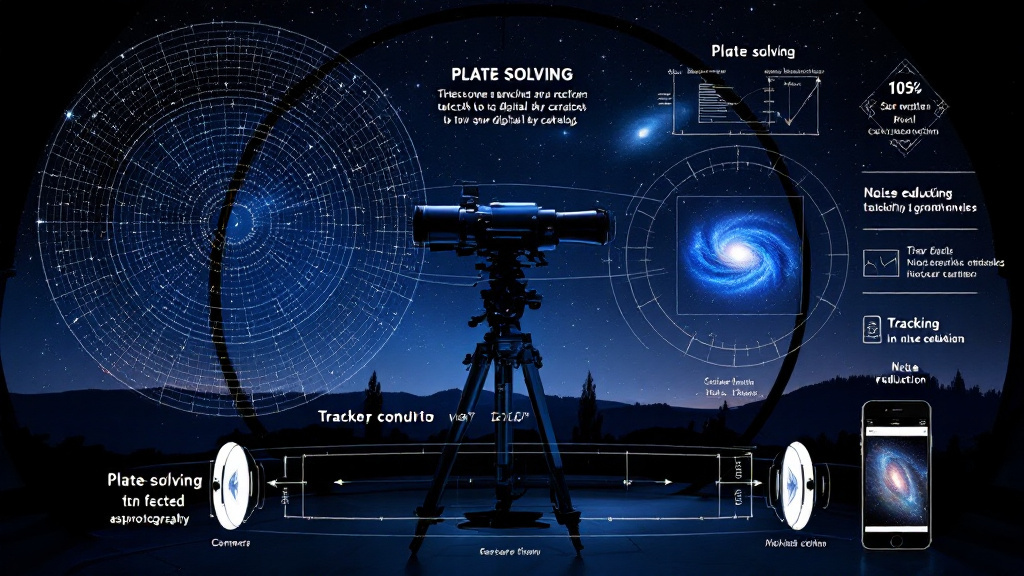
Several technologies work together to make modern astrophotography faster and more reliable. Plate solving compares patterns of stars in a camera image with an astronomical catalog, determining exactly where the telescope is pointed. This removes much of the guesswork from alignment and target acquisition. Once a target is identified, motor controls, encoders, and tracking software can keep it centered as the sky moves. For beginners, this means less time searching and more time observing or capturing images.
Noise reduction and machine vision add another layer of intelligence. Algorithms can identify hot pixels, satellite trails, clouds, and other unwanted artifacts, while exposure stacking reveals details hidden below the limits of a single frame. Live enhancement can also produce a useful preview before a lengthy imaging session is complete. In a system such as Starwise Observatory, sky recognition, GPS, weather data, astronomical catalogs, and a mobile or web application can work as one connected workflow. These tools do not eliminate the science; they translate complex operations into approachable steps and help observers make better use of every clear night.
What Automation Can—and Cannot—Replace
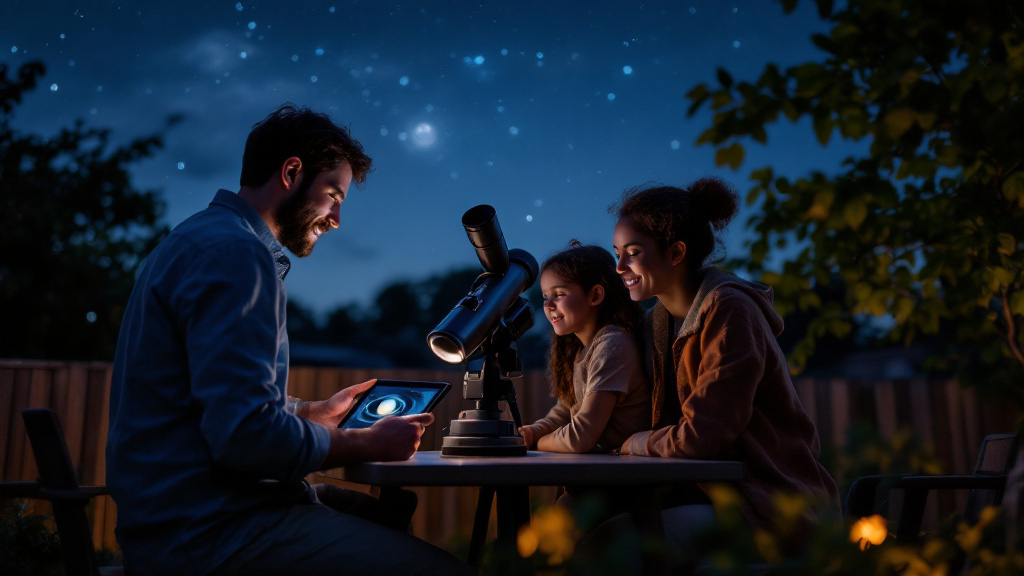
Automation is especially valuable for repetitive, precision-based tasks: aligning a mount, identifying a target, maintaining focus, tracking motion, stacking exposures, and reducing predictable noise. These capabilities lower the barrier for families, schools, educators, and newcomers who may be more interested in exploring the universe than mastering every mechanical step. They also give experienced astrophotographers more time to experiment with composition, filters, exposure strategy, and challenging targets. A guided system can make a short backyard session productive while still supporting deeper learning over time.
Human judgment remains essential, however. An algorithm may recognize Saturn, but an observer decides whether the atmosphere is stable enough for a sharp image. A photographer chooses when to preserve natural color, how much enhancement is appropriate, and whether a faint structure is genuine or a processing artifact. Interpretation, curiosity, and creative intent cannot be reduced to automation. The future of astrophotography is therefore collaborative: computer vision handles scale and precision, while people provide context and meaning. By combining intelligent tools with informed observation, computational imaging can make the cosmos easier to reach without making the experience less personal.